
Reviewed · MAUI HULA AND CRAFT CLASSES
Polynesian Wood Carving on Maui
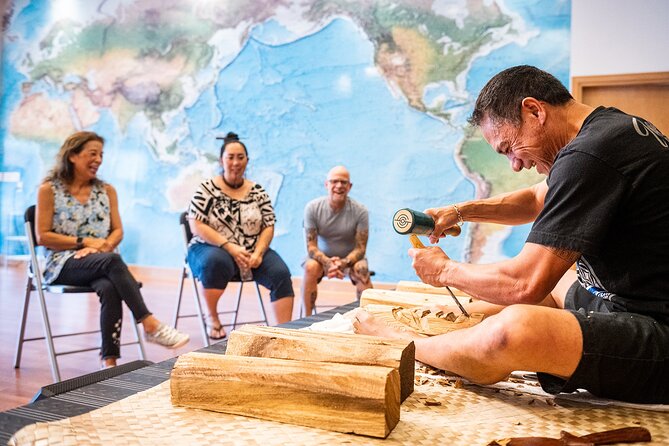
The heart of this Maui experience is simple: Uncle Vili carves a piece of wood from start to finish while explaining the tools, methods, symbols, and family traditions behind Polynesian carving. You then get to handle the tools and try the craft yourself, with no previous skill needed.
I like the combination of a hands-on activity and cultural background. I also like that your ticket includes time to explore three galleries covering Polynesian migration, plantation-era life, dance, art, and modern Hawaiʻi. The main consideration is the short format: at about one hour, this is an introduction, not a full carving workshop.
Key points
- Watch a complete carving demonstration: Uncle Vili explains his process as the work takes shape.
- Try the tools yourself: Wood and carving tools are provided, and beginners are welcome.
- Explore three cultural galleries: Displays trace migrations to Hawaiʻi and the effect of different cultures on island life.
- Pay $25 for a compact cultural stop: The price covers the demonstration, guide, materials, and gallery access.
- Plan around the 1:00 pm start: Arrive early so you have time to check in and see the exhibits.
- Expect a small group: Attendance is capped at 25 people, which helps keep the demonstration personal.
A Carving Lesson at the Queen Kaʻahumanu Center
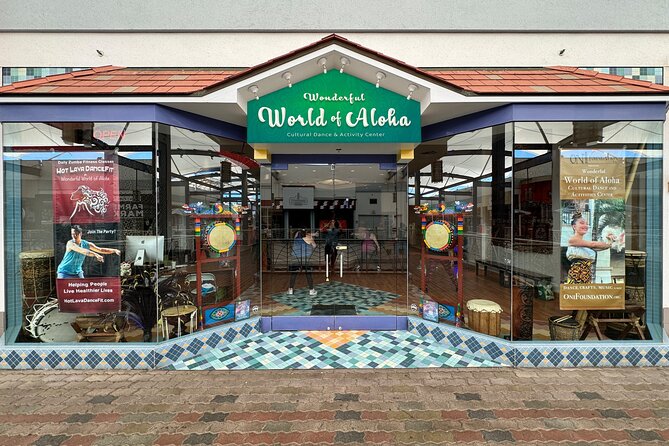
This experience takes place at the Oni Foundation’s Wonderful World of Aloha Cultural Activity Center, at 275 W Kaahumanu Ave in Kahului. The listed stop is Queen Kaʻahumanu Center, making this an easy activity to pair with time in central Maui.
The scheduled activity begins at 1:00 pm, but arriving early is smart. You are encouraged to check in and walk through the center’s three galleries before the carving talk starts. That early visit gives you useful context instead of dropping straight into a demonstration with no background.
The center presents displays about the people who reached Hawaiʻi over the centuries and the ways those cultures shaped island life. You will see the story move from the first Polynesians to the plantation era and then to modern Hawaiʻi. The exhibits cover cultural costume, dance, art, and daily life.
That range matters. Polynesian carving is not presented as a stand-alone craft with no connection to place. The galleries help you see how art and symbols fit into a larger story of migration, adaptation, and family tradition.
More hula and craft classes on Maui:
- Maui Sunset Dinner Cruise – A Hawaiian Hula Experience
★ 4.5 · 703 reviews - Maui Hula Show: Hula and Fire Dancing at South Maui Gardens
★ 4.5 · 152 reviews - Private One Piece Glassblowing Lesson for 1 or 2 People
★ 5.0 · 32 reviews
Three Galleries Before the 1:00 pm Talk
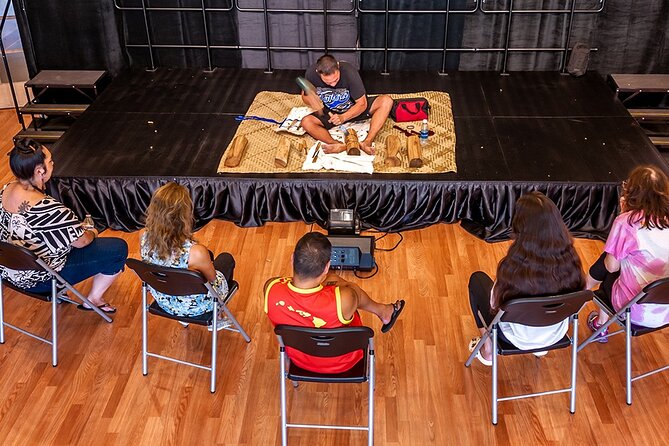
The gallery portion is not a guided walking tour with a long itinerary. It is time for you to look around before the main presentation. That makes the experience flexible, but it also means you should not expect a large museum with hours of exhibits.
I would allow extra time before 1:00 pm if you want to read the displays carefully. The supplied schedule describes three galleries, but it does not give a separate duration for them. Your actual time there will depend on when you arrive and how closely you examine the costumes and cultural displays.
The exhibits focus on migration to Hawaiʻi and cultural influence across several periods. This is useful preparation for the carving demonstration because Polynesian art carries meanings tied to ancestry, identity, nature, and tradition. You may find that details in the galleries give you better questions to ask during the talk.
The main drawback is the fixed start. If you arrive right at 1:00 pm, you may have little or no time to browse first. Do not treat the gallery visit as an afterthought if cultural context is one of your reasons for booking.
Meeting Uncle Vili, the Wood Carver
The central presentation is led by Uncle Vili, an expert wood carver and storyteller. He explains the tools and methods he uses, then shows how he approaches the ancient craft.
What makes this more useful than a simple display is the connection between technique and tradition. You are not only watching someone shape wood. You are hearing about the history and symbolism of Polynesian carving, along with Uncle Vili’s own family background and generations of carving.
That family connection gives the hour a personal angle. The craft is presented as something handed down, practiced, and understood within a living tradition. For you, that can make the meaning behind the finished object easier to appreciate than if you only saw the tools in a case.
The presentation also has a relaxed, conversational quality. The supplied comments describe Uncle Vili as friendly, easy to talk to, and a fun storyteller. That is useful to know if you prefer a personal talk over a formal lecture.
English is the offered language. If you want to ask about a symbol, tool, or part of the process, the talk format should give you a chance to do so, although the supplied details do not promise a formal question-and-answer period.
From Raw Wood to Finished Form
You will watch Uncle Vili create a carving from beginning to end. The exact design and wood used are not specified, so you should not book this expecting a particular figure or souvenir.
The value is in seeing the sequence. Carving can look mysterious when you only see a finished piece. A full demonstration lets you watch how the maker uses tools, controls the material, and makes decisions as the design develops.
Pay attention to the explanations as much as the movement of the tools. The methods tell you how the craft works, while the stories and symbols explain why the work matters. This combination is the strongest part of the experience.
The demonstration is also a good fit for people who enjoy seeing skilled work done in real time. You are not simply handed a finished object and told that it took years to learn. You see the process and hear about the experience behind it.
Still, keep the one-hour limit in mind. A complete demonstration in this setting is meant to introduce you to the craft. It cannot cover every style, tool, regional difference, or stage of Polynesian carving in great detail.
Same island, a completely different kind of day:
- Maui Pineapple Farm Tour in Haliimaile
★ 5.0 · 2,855 reviews - Small-Group Road to Hana Adventure Tour with Pickup & Lunch
★ 5.0 · 2,637 reviews - Maui Eco-Raft Tour: Eye-Level Whale or Dolphin Watching – Lahaina
★ 5.0 · 2,482 reviews - Maui Snorkeling Adventure to Molokini and Turtle Town
★ 4.5 · 2,221 reviews
Your Turn With the Tools
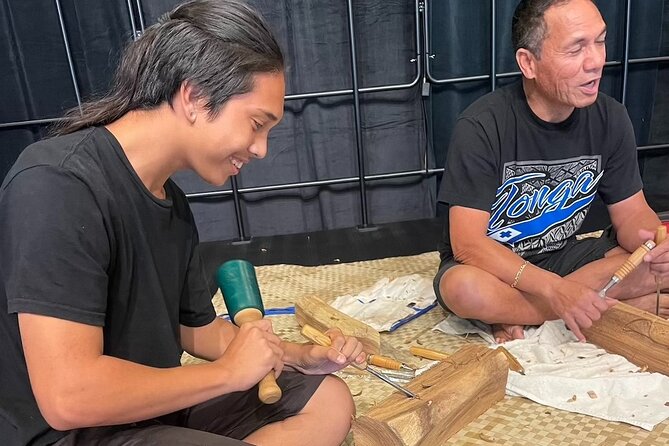
After watching, you get to try carving for yourself. The necessary tools and wood are provided, and no experience is required.
This is an important part of the format. Many cultural demonstrations leave you watching from a distance. Here, you get a direct feel for the basic act of working wood. You will not become an expert in an hour, but you can better understand the patience and control the craft demands.
The hands-on portion makes the activity suitable for families. The experience is open to all ages, and beginners are welcome. Parents should still use their own judgment with children around carving tools, since the supplied information does not give a minimum age or specific safety rules.
Do not expect to leave with a major finished carving unless the activity specifically provides one, which is not stated. The clear promise is that you can try the tools and wood yourself. The point is participation and understanding, not a guaranteed take-home object.
I especially like this feature for people who are tired of passive sightseeing. A short turn with the tools can change the way you look at carved objects later in your trip. You gain a sense of the effort behind even a small design.
Why the $25 Price Makes Sense
At $25 per person, this is a modestly priced cultural activity for Maui. Your cost covers the one-hour experience, the English-speaking local guide, the carving demonstration, the materials and tools used for your turn, and access to the cultural displays before the talk.
The value depends on what you want from a Maui activity. If you are looking for a long workshop, a meal, transportation, or a finished souvenir, this will not meet those expectations. Meals, refreshments, and gratuity are not included.
If you want a short, focused introduction to Hawaiian and Polynesian culture, the price is easier to justify. You get more than a gallery visit because the expert demonstrates a traditional craft and lets you take part. You also get more than a basic craft class because the talk connects the work to migration, symbolism, and family history.
For families, the fixed price can be attractive because the activity works across age groups. For adults who already know a lot about Polynesian carving, the hour may feel introductory rather than advanced.
Timing, Transport, and Group Size
The activity begins at 1:00 pm and ends back at the same meeting point. Because it lasts about an hour, it can fit neatly into a day based in Kahului or a larger Maui schedule that leaves the afternoon open.
The location is near public transportation, according to the supplied details. No transportation is included, so you need to arrange your own way to 275 W Kaahumanu Ave. The mobile ticket is convenient, and confirmation is provided at booking.
The group maximum is 25 people. That is not a private lesson, but it is small enough to keep the presentation from feeling like a large auditorium event. Your view of the carving will depend on where you stand or sit, and the information provided does not promise reserved seating.
Arrive early for the galleries and check-in. This is the most useful timing tip. Showing up at the start may get you to the talk, but it cuts out part of the cultural material that helps frame the carving.
The activity ends where it begins, which simplifies the rest of your day. Since no meal or refreshment is included, plan those separately if you need food around the 1:00 pm session.
Who Will Enjoy This Maui Activity
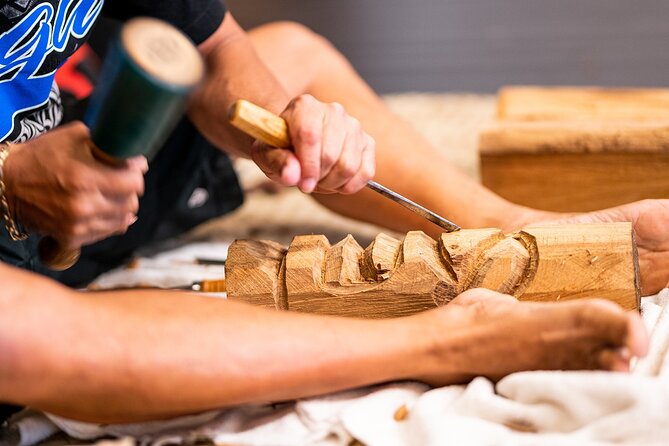
I would recommend this to families looking for a low-cost cultural outing with a hands-on element. Children and adults can watch the demonstration, hear stories, and take a turn without needing previous carving experience.
It also suits anyone who wants more cultural substance than a quick photo stop. The three galleries and the discussion of Polynesian migration give you a broader view of Hawaiʻi, while Uncle Vili’s family connection adds a personal layer.
Art and craft enthusiasts should find the process rewarding, especially if you enjoy watching a maker work with traditional tools. The chance to try the tools yourself gives the presentation more weight.
This may be less satisfying if you want a full-day cultural program, a detailed museum tour, or a long private workshop. The schedule is compact and the subject is introduced rather than covered at an advanced level.
The activity is offered in English. Service animals are allowed, and most people can participate. The provided details do not list specific accommodations for every mobility need, so you should contact the provider if you require information beyond those points.
A Friendly, Personal Style
The strongest praise for this experience centers on two things: the information and the warm personal connection. The presentation is described as enjoyable and informative, with Uncle Vili singled out as a kind and engaging teacher.
That combination is worth noting. Some cultural talks have facts but little personality. Others are friendly but light on substance. Here, the appeal is the mix of history, craft, family stories, and a chance to join in.
You should arrive ready to listen, not just take a turn with the tools. The carving itself is the visual focus, but the stories about Polynesian tradition and family practice give the activity its meaning.
At the same time, keep your expectations realistic. A welcoming presentation does not turn this into an intensive study of Hawaiian culture. You get a focused hour with a carver, three galleries to browse, and a beginner-level hands-on activity.
Cancellation and Practical Planning
You can cancel for a full refund if you do so at least 24 hours before the local start time. Cancellations made less than 24 hours in advance are not refunded, and changes inside that window are not accepted.
That policy makes early planning useful, especially since the activity is often booked about 27 days ahead. You do not need to reserve that far ahead based on the information provided, but the average booking pattern suggests you should avoid leaving it until the last minute if this is important to your schedule.
Bring your mobile ticket and arrive before 1:00 pm. Since gratuity is not included, you may choose to tip separately if you feel the guide earned it, but the supplied price does not include that amount.
Should You Book Polynesian Wood Carving on Maui?
Book it if you want an affordable, family-friendly introduction to Polynesian carving with a real maker, cultural galleries, and a chance to use the tools yourself. The strongest reasons are Uncle Vili’s personal storytelling and the way the experience links carving to migration, symbolism, and Hawaiian life.
Skip it if you are seeking a long workshop, a private lesson, or a finished carving to take home. For everyone else, $25 buys a useful hour in Kahului, especially if you arrive early enough to explore all three galleries before the 1:00 pm talk.
FAQ
How long does the Polynesian wood carving experience last?
The carving experience lasts approximately one hour. You are encouraged to arrive early to check in and explore the three cultural galleries before the 1:00 pm presentation.
What time does the activity begin?
The activity begins at 1:00 pm local time.
Where does the activity take place?
It starts and ends at the Oni Foundation Inc, Wonderful World of Aloha Cultural Activity Center, at 275 W Kaahumanu Ave, Kahului, Hawaii 96732. The listed stop is Queen Kaʻahumanu Center.
Do I need previous carving experience?
No. The activity is designed for beginners, and tools and wood are provided for you to try.
Is the activity suitable for children?
Yes. It is described as suitable for all ages and good for the whole family. The supplied details do not provide a minimum age.
What is included in the $25 price?
The price includes the local English-speaking guide, the wood and tools used for the hands-on portion, and the cultural experience. Meals, refreshments, and gratuity are not included.
Just added around Maui
- Whale Watch Sail Ma’alaea★ 4.9 · 27 reviews
- Wailea-Makina: Sea Caves, Molokini Snorkel & Turtle Town★ 4.9 · 37 reviews
- West Maui and Molokai Special 45-Minute Helicopter Tour★ 5.0 · 9 reviews
- 2.5 Hour Whale Escape Tour★ 5.0 · 44 reviews
- Turtle Town Clear Kayak & Snorkel Tour (8am-11am)★ 5.0 · 6 reviews
- Maui: Private All-Inclusive Road to Hana Tour with Pickup★ 5.0 · 28 reviews
- Zumba Classes in Kihei Maui – Private or Group (This class is high impact )★ 4.5 · 6 reviews
- Whalewatch Deluxe Tour from Ma’alaea Harbor★ 4.5 · 37 reviews
Maui Hula and Craft Classes, compared.

Maui Sunset Dinner Cruise – A Hawaiian Hula Experience
Read our review →
Maui Hula Show: Hula and Fire Dancing at South Maui Gardens
Read our review →

Maui Jewelry Making Class with Puka Shells and Pearls
Read our review →
Browse the lists this tour appears in