
Reviewed · MAUI
Honey Bee Adventure at the Maui Honey Bee Sanctuary
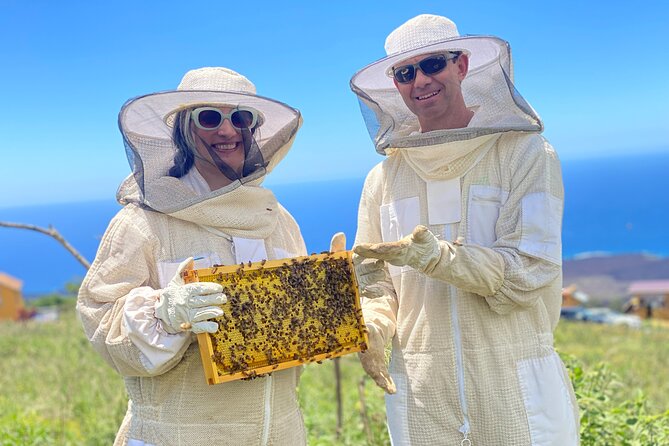
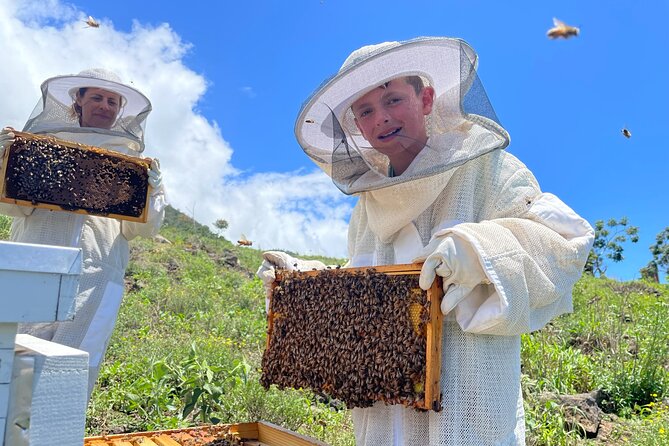
The memorable part comes when you suit up and stand beside a live hive. Erica, the beekeeper, removes sections of the hive so you can see and hold them, turning a classroom lesson into a close look at bees at work. The apiary also gives you broad views over Maui and the water.
I like the small maximum of eight people, since you get more room to ask questions and more direct help with the gear. I also like the honey tasting afterward, especially because you can compare honey from the sanctuary with other local Maui harvests and buy beeswax candles, lotions, lip balm, salves, jewelry, and honey.
The main consideration is the price, listed by one participant at $79 per person. That can feel high for a 90-minute activity, especially if you want a polished, tightly timed tour. The setting is informal, and the front stand may not immediately make it clear where you should check in, so arrive ready for a farm experience rather than a slick attraction.
Key points to know before you book
- You handle real hive trays: After the presentation, Erica opens the hives so you can see the bees and hold sections of the working colony.
- The group is capped at eight: This keeps the experience personal and gives you a better chance to ask questions.
- Honey tasting comes after the hive visit: Sample honey from the sanctuary and the local Maui beekeeping community at the farm stand.
- The views are part of the appeal: The Kula apiary looks out across Maui toward the water, adding a scenic stop to the bee lesson.
- Bee gear is supplied: You receive a bee suit and gloves, but you must bring closed-toe shoes and long white or light-colored socks.
- Plan for a rural, weather-sensitive outing: The tour lasts about 90 minutes, starts at 10:30 a.m., and can be canceled for poor weather.
Starting at the Kula apiary at 10:30 a.m.
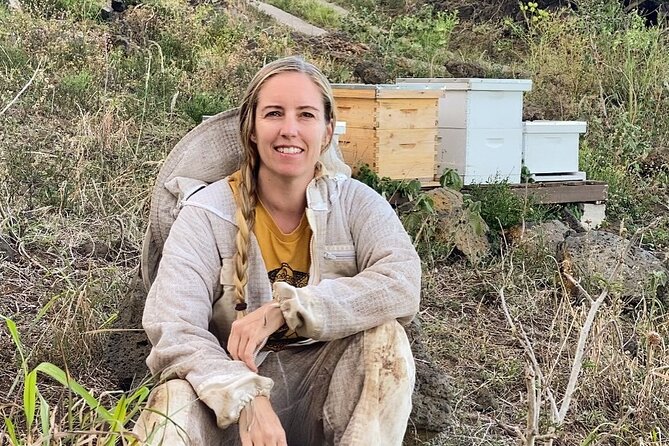
You meet at 16-655 Piilani Highway in Kula, at the Maui Honey Bee Sanctuary. The activity begins at 10:30 a.m. and finishes back at the same place, so you do not need to arrange a separate return transfer.
Kula is a very different setting from the resort coast. The drive itself can become part of the morning, with winding roads and fine views along the way. One useful point from the experience is that the approach may feel like a small road adventure, particularly if you come by a longer scenic route. Give yourself enough time to find the address and park without rushing.
The check-in area is a farm stand rather than a large visitor center. That has charm, but it can also create a little confusion when you first arrive. The stand may not immediately tell you where to go, so if you do not see Erica right away, ask for the beekeeper or tour meeting point.
That informal start is worth keeping in mind. You are visiting a working beekeeping property, not entering a major museum with signs, ticket windows, and staff at every turn. Once Erica takes over, the purpose of the visit becomes clear: learn how honeybees live, work, and support food production.
Other Maui days people book alongside this one:
- Maui Pineapple Farm Tour in Haliimaile
★ 5.0 · 2,855 reviews - Small-Group Road to Hana Adventure Tour with Pickup & Lunch
★ 5.0 · 2,637 reviews - Maui Eco-Raft Tour: Eye-Level Whale or Dolphin Watching – Lahaina
★ 5.0 · 2,482 reviews
The presentation explains why bees matter
The first part is an educational talk about honeybees, pollination, beekeeping, and the way honey is made. Erica’s stated mission is to help people understand the role honeybees play on the planet, and that purpose shapes the tour.
This is especially useful for children and anyone who knows honey mainly as something in a jar. You learn to connect the finished product with the living colony, the flowers bees visit, and the beekeeper’s work. The pollination lesson also gives the honey a larger meaning. Bees are not simply making a sweet treat for people. They are part of the process that supports plants and food production.
The presentation is likely to appeal most to people who enjoy learning by seeing real examples. You are not only hearing about hive life, then moving on. The talk leads into the practical part, when you put on protective equipment and approach the boxes.
The pace can feel more personal than formal. That is good if you want to ask Erica about honey, beeswax, hive management, or the products made from the colony. It may feel less satisfying if you expect a highly scripted lecture with polished visuals and a fixed stage presentation.
Suited up for a close look at the hive
Bee suits and gloves are provided. You need to bring closed-toe shoes and long white or light-colored socks. That clothing advice matters. You are going into an area with live bees, so sandals and short socks are poor choices even in warm Maui weather.
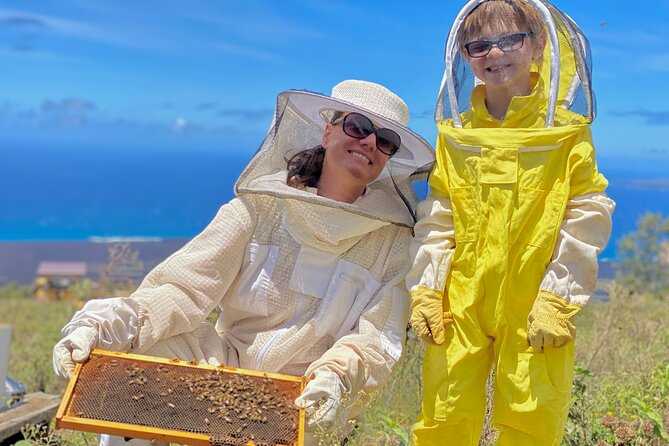
Putting on the bee gear is part of the fun, particularly for children. It gives the visit a clear sense of occasion, and family groups can enjoy the simple novelty of seeing one another dressed for the apiary. The equipment also helps you feel prepared before you get close to the boxes.
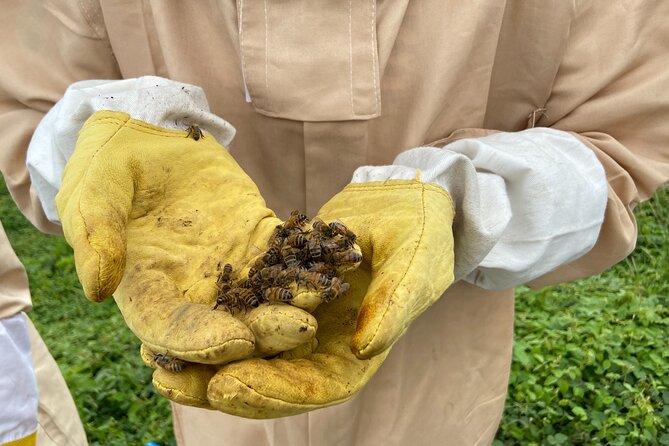
Once the group is suited up, Erica brings out hive sections for a closer look. You may see bees moving across the frames and handle the trays under her direction. This is the part that separates the activity from a standard honey tasting. You are close enough to understand that a hive is a busy working community, not just a wooden box sitting in a field.
You should follow the guide’s instructions carefully and move at the group’s pace. The experience is not recommended for anyone with a severe bee sting allergy. Most people can take part, but the presence of live bees is an important fact to consider before booking.
The small group limit helps here. With no more than eight people, you have a better chance of seeing what Erica points out and asking a question without having to compete with a crowd. It also makes the hive visit feel less like a show viewed from the back of a line.
Seeing honey-making as a working process
The hive visit gives the presentation a practical focus. You can see the frames and learn how bees store honey, while Erica explains the connection between flowers, pollination, nectar, and the finished product.
You should not expect a full beekeeping course in 90 minutes. The tour is an introduction, designed to make the subject understandable and memorable. Its value comes from the contact with the hive and the chance to connect basic facts with something directly in front of you.
This is also a good setting for questions. If you want to know how bees share work, how honey is collected, or what beekeepers do with beeswax, the small group gives you a reasonable chance to ask. The exact depth will depend on the questions your group brings.
The visit can work for a family, a couple, friends, a honeymoon, a school group, or a team event. Children can enjoy the suits and the sight of the bees, while adults may appreciate the broader lesson about food, farming, and conservation. A group of students could get more from this than from a short talk because the subject is connected to a real hive.
Same island, a completely different kind of day:
- Maui Snorkeling Adventure to Molokini and Turtle Town
★ 4.5 · 2,221 reviews - Maui: Haleakala Sunrise Spectacular with Local Breakfast
★ 4.5 · 2,155 reviews - Maui Snorkeling Adventure From Ma’alaea Harbor to Molokini
★ 4.5 · 1,997 reviews - Maui: Turtle Town Snorkel with Photo and Video
★ 5.0 · 1,916 reviews
Honey tasting at the farm stand
After the hive visit, you taste honey from the sanctuary and from other members of the local Maui beekeeping community. This is a practical finish: first you see where honey comes from, then you taste the results.
The tasting gives you a way to compare honey rather than treating it as one uniform product. Local flowers and conditions affect what bees collect, so the samples can help you notice differences from jar to jar. The experience does not promise a formal tasting class, but it provides a pleasant chance to slow down and enjoy the harvest.
The farm stand also sells products made with gifts from the hive. You might find honey, beeswax candles, lotions, lip balm, muscle salve, and jewelry. That selection gives you more useful souvenirs than a generic gift shop. A small jar of honey is easy to pack for some travelers, while a beeswax candle or lip balm offers a different reminder of the visit.
Prices for these products are not provided, so you should check at the stand before deciding what to buy. The shopping is optional, but it adds value if you like local goods and want to support the beekeeper’s work beyond the admission fee.
The Kula views add more than scenery
The apiary’s panoramic views are one of the tour’s strongest extras. From the bee farm, you can look across Maui toward the water, giving the visit a scenic setting that a city classroom could not match.
The view matters because the activity is fairly short. You are not spending a whole day at the sanctuary, so the setting helps the 90 minutes feel like part of your Maui sightseeing rather than a stand-alone indoor lesson. Take a moment to look around before or after the hive visit.
The drive can also be scenic, especially if you take a longer route through the island. One caution: do not plan the tour so tightly that a slow drive or missed turn makes you late. The address is in Kula, and the road experience can be winding. You will enjoy the morning more if you treat the journey as part of the outing.
Is 90 minutes enough for the price?
The activity lasts about an hour and a half. That is enough time for the presentation, suiting up, the live-hive portion, and honey tasting, but it is not a half-day farm visit.
At the $79 per person price noted by one participant, value depends on what you want. If you are looking for a rare hands-on experience, the fee buys access to a live hive, personal instruction, samples, and a scenic Kula location. For a family that enjoys nature and learning, those elements can justify the cost.
If you measure value by minutes of entertainment, the price may feel steep. One person found the experience not worth that amount and also felt the arrival process was disorganized. That criticism is fair to consider. The activity has an informal farm character, and the small group size may be more important to you than a long itinerary.
I would compare it with the cost of another paid Maui activity by asking a simple question: do you want to see something you cannot easily experience on your own? If yes, the chance to handle hive frames and learn directly from a beekeeper gives this tour a clear reason to exist. If you only want to taste honey and buy a jar, the farm stand alone may be enough.
Who will enjoy the bee adventure most?
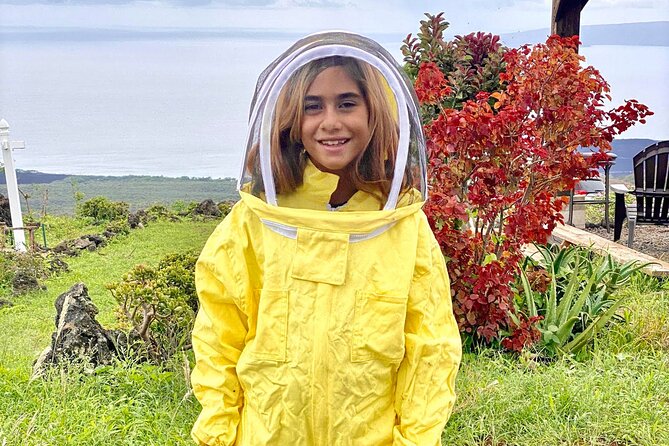
Families are a strong match, particularly if your children like animals, science, or hands-on activities. The bee suits add a playful element, while the live hive gives the visit real substance. Younger children can take part, but you should be comfortable with the safety instructions and the fact that bees are present.
Couples and honeymooners may like the combination of an unusual activity, good views, and a local product to take home. It is less polished than a resort excursion, but that can be the appeal if you want a working Maui setting.
School groups and corporate teams can use the visit as a shared learning activity. The group limit of eight makes it best for a small class section or a compact team rather than a large organization all arriving at once. Larger groups would need to confirm arrangements directly with the operator.
You should skip it if anyone in your party has a severe bee sting allergy. You should also think twice if you dislike rural settings, protective clothing, or activities where the exact pace depends on the guide and the conditions.
Weather, cancellation, and practical planning
The tour requires good weather. If poor conditions cause a cancellation, you are offered another date or a full refund. The activity also requires a minimum number of participants, and a cancellation for that reason brings an offer of another date or experience, or a full refund.
For your own plans, leave space around the booking rather than placing it between two fixed appointments. The tour ends back at the meeting point, but the drive to and from Kula can take longer than expected if roads are slow or unfamiliar.
You receive confirmation when you book, and mobile tickets make the entry process simple once you find the meeting point. Free cancellation is available if you cancel at least 24 hours before the start time. Cancellations or changes made within 24 hours are not refunded or accepted.
The activity is offered in English. Most people can participate, but the operator specifically warns against booking if someone has a severe bee sting allergy. Bring the required shoes and socks, arrive at the 10:30 a.m. start with time to spare, and remember that this is an outdoor farm visit.
Should you book the Maui Honey Bee Sanctuary?
Book this tour if you want a small, unusual Maui activity with real contact with a working hive. The strongest reasons are Erica’s personal instruction, the chance to handle hive trays, the local honey tasting, and the sweeping Kula views. It is particularly good for families, curious couples, and anyone who likes learning through direct experience.
Skip it if $79 per person feels too high for 90 minutes, or if you prefer a polished attraction with clear check-in signs and a tightly managed schedule. The informal setup is part of the character, but it can also be a weakness.
For the best fit, plan it as a scenic Kula morning rather than a quick stop squeezed between beach plans. Wear the right shoes and socks, keep your expectations practical, and you will know exactly what you are paying for: a close look at bees, a lesson in pollination and honey-making, and a taste of Maui made by the hive.
FAQ
Where does the Maui Honey Bee Adventure begin?
The tour begins at 16-655 Piilani Highway, Kula, Hawaii 96790.
What time does the tour start?
The scheduled start time is 10:30 a.m.
How long does the experience last?
The activity lasts approximately one hour and 30 minutes.
Where does the tour end?
The tour ends back at the original meeting point.
What clothing should I bring?
Bring closed-toe shoes and long white or light-colored socks. Bee suits and gloves are provided.
How many people can join the tour?
The maximum group size is eight participants.
Is the tour suitable for people with severe bee sting allergies?
No. The activity is not recommended for people with severe bee sting allergies.
What happens if the weather is poor?
If poor weather causes the activity to be canceled, you will be offered another date or a full refund.
Just added around Maui
- Whale Watch Sail Ma’alaea★ 4.9 · 27 reviews
- Wailea-Makina: Sea Caves, Molokini Snorkel & Turtle Town★ 4.9 · 37 reviews
- West Maui and Molokai Special 45-Minute Helicopter Tour★ 5.0 · 9 reviews
- Turtle Town Clear Kayak & Snorkel Tour (8am-11am)★ 5.0 · 6 reviews
- Maui: Private All-Inclusive Road to Hana Tour with Pickup★ 5.0 · 28 reviews
- 2.5 Hour Whale Escape Tour★ 5.0 · 44 reviews
- Whalewatch Deluxe Tour from Ma’alaea Harbor★ 4.5 · 37 reviews
- Zumba Classes in Kihei Maui – Private or Group (This class is high impact )★ 4.5 · 6 reviews