
Reviewed · MAUI SURF LESSONS
Semi-Private Surf Lesson at Ka’anapali Beach
Ka’anapali Beach gives this lesson a fine setting: warm water, famous Maui scenery, and beginner-friendly waves that can have children and adults standing on a board within a few tries. The semi-private format is the main draw, since your instructor can adjust the pace for a nervous child, an eager teenager, or an adult who wants more time to figure out paddling.
I like the included board, rash guard, water shoes, and parking validation, since those small costs and hassles can add up at a resort beach. I also like that the staff photographer works during the lesson, giving you the option to buy a useful family souvenir afterward. The main caution is the surf itself: Ka’anapali can be shallow and coral-filled, and some people have found the conditions rough on falls and hard on the paddle back out.
Key points at a glance
- A 30-minute safety and land lesson starts the session, so you get basic instruction before entering the water.
- Ka’anapali Beach is close to major resorts, making this easy to fit into a Maui holiday.
- Instructors work well with mixed ages, including children as young as six in family groups.
- Nick, Carlos, Andy, Christian, and Peter are among the instructors praised by name, though your assigned instructor may differ.
- Boards, rash guards, water shoes, and parking validation are included, while professional photos cost extra.
- The beach bottom can be shallow and coral-strewn, so expect some bumps, scrapes, and board rash.
Learning to stand at Ka’anapali Beach
Surfing looks simple from shore. Lie down, paddle, stand, and glide. The ocean has other plans, especially when you are trying to remember which foot goes forward while a wave lifts the board behind you.
This lesson breaks the process into manageable steps. You check in 30 minutes before the scheduled start, then begin with about 30 minutes on land. That safety lesson is important for first-timers because it gives you a chance to learn the basic position, handling, and water rules before you are balancing on a moving board.
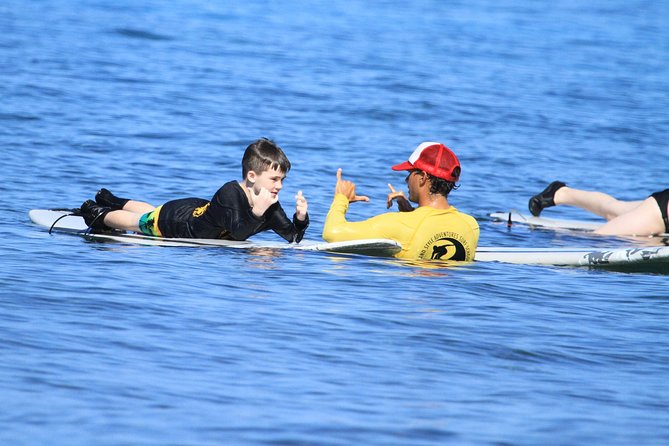
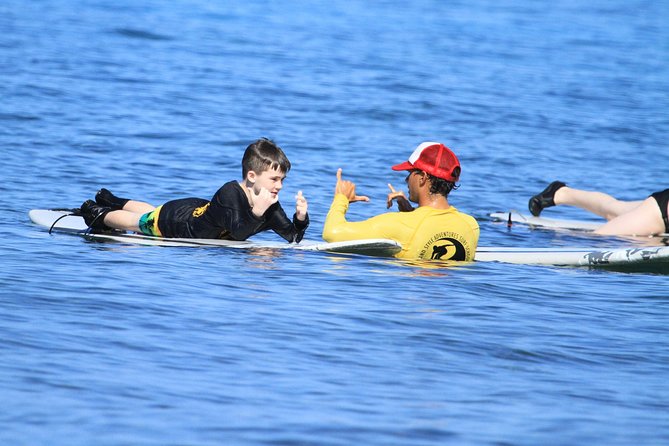
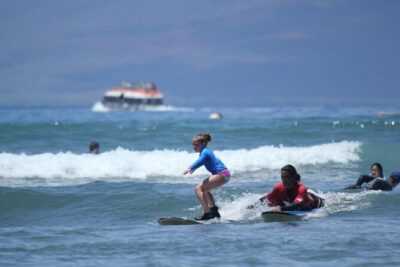
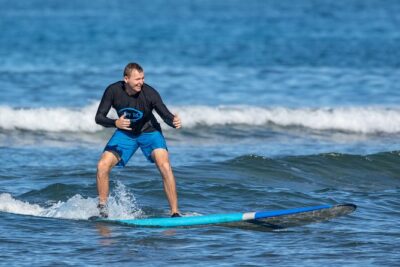
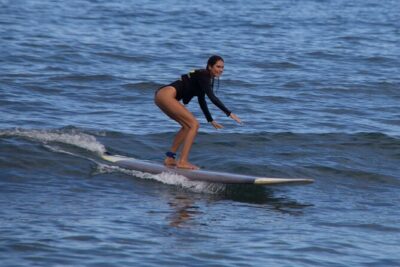
After that, you head into the water with your instructor. The goal is not to turn you into a polished surfer in one session. It is to help you feel safe, catch a few waves, and perhaps stand long enough to glide toward shore. For many families, that is exactly the right target.
The instruction works especially well for groups with different confidence levels. A nervous 10-year-old can take smaller waves while a more adventurous teenager tries to progress. Adults can work at their own speed instead of being pushed through a one-size-fits-all class.
More Kaanapali Beach tours and cruises:
- Maui: Original Sunset Cruise with Open Bar from Ka’anapali Beach
★ 5.0 · 1,422 reviews - West Maui Half Day Snorkel from Ka’anapali Beach
★ 5.0 · 1,253 reviews - Maui Premium Sunset Dinner Cruise from Ka’anapali Beach
★ 5.0 · 903 reviews
What the semi-private format changes
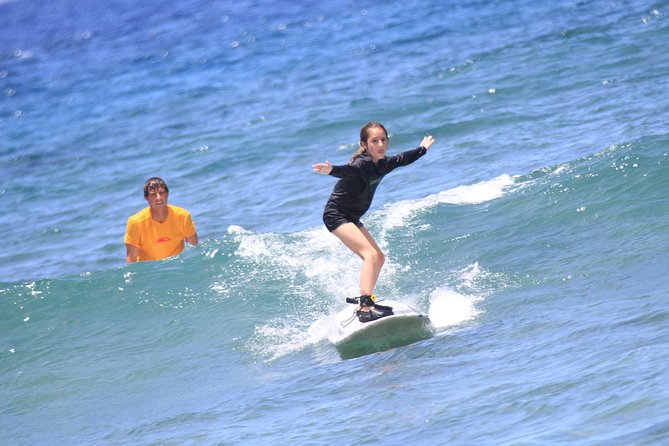
The word semi-private matters here. You are not necessarily receiving one instructor all to yourself, but the lesson is capped at 15 people and the format is designed to offer more individual attention than a large group class.
Some family groups have had multiple instructors for a small number of participants. One group of five had three instructors, which allowed the staff to spread out and help people at different skill levels. That kind of attention can make the difference between a frustrating hour and a first successful ride.
You should still keep expectations realistic. A group size of up to 15 is not the same as a private lesson. If the class fills, your instructor cannot give every person constant one-to-one coaching. Much of your time will involve waiting for a suitable wave, paddling back out, and watching for the next chance.
The best use of the format is to tell the instructor what you need early. If you are nervous, say so. If you already feel comfortable on a board, say that too. Families have had good results when instructors adjust the waves and encouragement to each person rather than treating everyone alike.
The 30-minute safety lesson matters
The land portion may sound like the least exciting part, but I consider it a useful investment. It gives you time to learn how to position yourself on the board, how to get ready for a wave, and what to do when a ride ends.
A proper safety briefing also helps you understand the conditions at Ka’anapali. This is not a swimming-pool lesson. Waves move you around, boards can strike you, and the bottom may be closer than expected in shallow areas. Knowing what to expect can reduce panic when your first attempt goes wrong.
The class then moves from explanation to practice in the water. You will need a moderate level of physical fitness, since paddling, pushing up, balancing, and getting back on the board all require effort. This is not a passive beach activity.
You should also be ready for some repetition. You may miss a wave, stand too late, fall sideways, or paddle in the wrong direction. That is normal. The first success often comes after several awkward attempts, so a patient instructor is worth more than a flashy introduction.
Ka’anapali’s waves, coral, and board rash
Ka’anapali is a beautiful place to learn, but the beach is not always soft and forgiving beneath the surface. Some sessions have had small, manageable waves. Other days have brought larger waves that instructors considered strong for beginners, with the option to reschedule.
The shallow water can be a mixed blessing. It may help you feel less out of your depth, but falling in a shallow coral area can cause scrapes. You may also find it harder to paddle back over incoming waves. That is one reason the safety lesson and instructor guidance matter.
A few people have developed painful rashes on their thighs from sitting on the board while waiting for waves. A rash guard protects your upper body, but it does not necessarily prevent friction where your legs meet the board. You may want to listen carefully to instructions about board position and avoid spending more time seated than necessary.
Conditions change, and the experience can vary sharply from one morning to another. On a calm day, beginners may catch several long rides. On a rougher day, the physical work of getting through the waves may take much of your energy. The operator can cancel for poor weather and offer another date or a full refund.
More Maui surf lessons:
- Maui: Two Hour Beginner Group Surf Lesson in Kihei
★ 5.0 · 950 reviews - Outrageous Surf ScHool Lesson on Lahaina Side
★ 4.5 · 547 reviews - Group Surf Lesson at Kalama Beach in Kihei
★ 5.0 · 264 reviews - Maui Lahaina Group Surf Lesson
★ 4.9 · 235 reviews
Instructors who make a difference
The strongest part of this experience is the staff’s approach to beginners and children. Nick has helped calm nervous children and get them into the surf. Carlos and Andy have been praised for making lessons easygoing and adjusting to different ages. Christian has earned warm approval from families with children, and Peter has helped first-timers enjoy the process.
Those names reflect the team, but they do not guarantee that you will have a particular instructor. The important point is the style of teaching described by the experience: patient, safety-minded, and encouraging.
That said, instruction in the water may not always feel equally detailed. One family felt the instructor waited too long to signal when to paddle and offered more shouting than technique advice. That is a useful warning for anyone buying a semi-private lesson at a premium price.
If you want detailed correction on every attempt, ask for it directly. Say, What should I change on my next wave? A good answer might concern your timing, hand placement, stance, or weight distribution. Clear questions can turn a general beginner lesson into more useful coaching.
Family groups and mixed ages
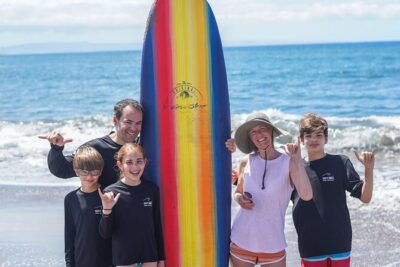
This is best suited to families who want to share an activity rather than watch one person take a lesson. Groups have included children, teenagers, parents, and grandparents, with ages ranging from about six to 45 in one session.
The format has worked particularly well for children who are nervous at first. A calm instructor can help a child feel safe without forcing a difficult wave. Once that first fear fades, many children become eager to try again.
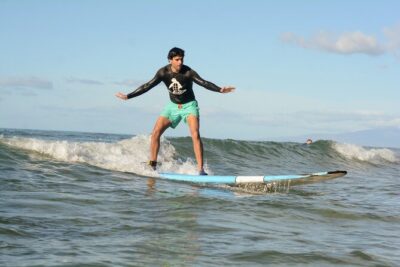
Teenagers may appreciate the more active side of the lesson. They can attempt stronger waves when ready, while younger participants can focus on short rides near shore. Adults should not assume the children will struggle more than they do. Standing up requires balance, timing, and a willingness to keep trying at any age.
I would not book this for someone who wants a quiet beach morning. You will be wet, tired, and working throughout the lesson. You also need enough physical ability to paddle and push yourself up repeatedly.
Gear, photos, and parking at the resort
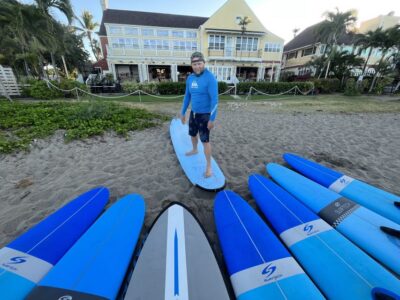
The practical inclusions are well chosen. You receive a surfboard, rash guard, and water shoes, so you do not need to bring your own equipment for a first lesson. The water shoes are especially useful given the possibility of a shallow coral bottom.
Parking validation covers up to three hours. That gives you a reasonable buffer around the lesson, though you should still arrive early. Finding the meeting point and getting from the resort area to the beach can take longer than expected, especially if you need to park first.
The meeting point is at Kaanapali Alii Resort, 50 Nohea Kai Drive in Lahaina. The activity ends back at that meeting point, so you are not left arranging a separate pickup from another beach.
A staff photographer takes photos throughout the lesson. You can buy the images at the end, but they are not included in the lesson price. I like having the choice. Surfing is difficult to photograph from the beach, and a good action shot can be a better souvenir than another posed family picture. Still, treat the photos as an optional extra, not part of the core value.
Timing and the value of the lesson
The published timing needs a little care. The overall experience is described as about 1 hour and 30 minutes, while the detailed schedule says check-in is 30 minutes early, followed by a 30-minute land and safety lesson and about an hour and a half in the water. Those figures do not line up neatly.
I would confirm the exact water time when booking, especially if you have a dinner reservation, airport transfer, or another activity planned. In any case, allow more than the headline duration because you need to arrive 30 minutes before the start.
As for value, the answer depends on what you want. The cost buys instruction, equipment, beach access, parking validation, and a structured chance to catch waves at one of Maui’s best-known beaches. For a family of first-timers, the convenience can justify paying more than an informal board rental.
The value is weaker if you expect a long, highly technical coaching session. Some other surf lessons run for two hours, while this experience is generally presented as about 90 minutes. The semi-private setup can make up for some of that shorter time, but only if the staff-to-student balance is favorable on your date.
When to book, and how to prepare
Choice of lesson times is available throughout the day. I would choose a time that leaves room for the check-in period and possible delays at the beach. You should also avoid placing an important dinner or scheduled transfer immediately afterward.
Arrive 30 minutes early, as requested. That time is useful for parking, finding the beach access, checking in, and getting fitted with equipment. The parking validation lasts up to three hours, which should cover the activity and a modest cushion.
Wear a swimsuit or clothing suitable for active time in the water. The supplied rash guard and water shoes cover key equipment needs, but the board can still rub your thighs. Pay attention to board position and do not assume every fall will happen in deep water.
Most of all, bring a cooperative attitude. Your first ride may be short. You may fall often. The people who get the most from this lesson are willing to listen, try again, and accept that the ocean sets the schedule.
Should you book the Ka’anapali lesson?
I would book this for a family or small group that wants a guided first surf experience close to the Ka’anapali resorts. The strongest reasons are the patient approach with children, the included equipment, the flexible group format, and the chance to buy professional photos afterward.
I would think twice if you want advanced technique, guaranteed private coaching, or a full two-hour water session. Coral, shallow water, board rash, and changing wave conditions are real considerations, not minor footnotes.
For most beginners, the deciding question is simple: do you want to stand up once, share a funny family story, and perhaps ride a wave all the way toward shore? If yes, this is a sensible Maui activity. Just confirm the exact timing, arrive early, and ask for specific coaching when you need it.
FAQ
Where does the surf lesson meet?
The meeting point is Kaanapali Alii Resort, 50 Nohea Kai Drive, Lahaina, Hawaii 96761. The activity ends back at the same meeting point.
How early should I arrive?
You should check in 30 minutes before the lesson starts. Arriving early also gives you time to park and find the beach access.
How long is the lesson?
The experience is listed as approximately 1 hour and 30 minutes, but the detailed timing describes a 30-minute land and safety lesson followed by about an hour and a half in the water. Confirm the exact schedule when booking.
What equipment is included?
A surfboard, rash guard, and water shoes are included. Parking validation for up to three hours is also provided.
Are photos included?
No. A staff photographer takes photos during the lesson, and you may purchase them at the end.
How many people can join?
The activity has a maximum of 15 participants. It is described as a semi-private lesson, rather than a fully private class.
Is the lesson suitable for children?
Families with children and teenagers have taken part, including groups with children around age six and older. Participants should have a moderate level of physical fitness.
What happens if the weather is poor?
The experience requires good weather. If it is canceled because of poor conditions, you can choose a different date or receive a full refund.
Can I cancel for a refund?
You can cancel at least 24 hours before the start time for a full refund. Cancellations or changes made less than 24 hours before the start time are not accepted and are not refunded.
More Workshops in Maui
- Private Surf Lesson for Two Near Lahaina
★ 5.0 · 189 reviews - Discover Scuba Diving Class from Lahaina
★ 5.0 · 185 reviews - Maui Scuba Diving Introductory Lesson from Lahaina
★ 5.0 · 179 reviews - 2 Hour Beginner Group Surf Lessons
★ 5.0 · 154 reviews
Just added around Maui
- Whale Watch Sail Ma’alaea★ 4.9 · 27 reviews
- Wailea-Makina: Sea Caves, Molokini Snorkel & Turtle Town★ 4.9 · 37 reviews
- West Maui and Molokai Special 45-Minute Helicopter Tour★ 5.0 · 9 reviews
- Turtle Town Clear Kayak & Snorkel Tour (8am-11am)★ 5.0 · 6 reviews
- Maui: Private All-Inclusive Road to Hana Tour with Pickup★ 5.0 · 28 reviews
- 2.5 Hour Whale Escape Tour★ 5.0 · 44 reviews
- Whalewatch Deluxe Tour from Ma’alaea Harbor★ 4.5 · 37 reviews
- Zumba Classes in Kihei Maui – Private or Group (This class is high impact )★ 4.5 · 6 reviews
Maui Surf Lessons, compared.
2 Hour Private Group Surf Lesson in Lahaina Maui
Read our review →Browse the lists this tour appears in