
Reviewed · MAUI SCUBA DIVING TOURS
Certified Divers! Scuba dive the Ka’anapali Coast and more!
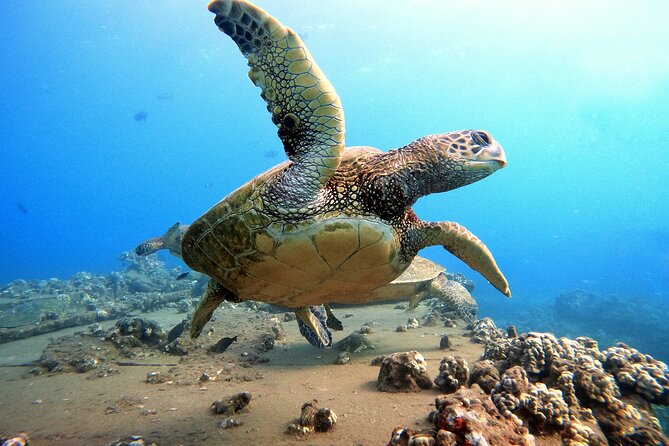
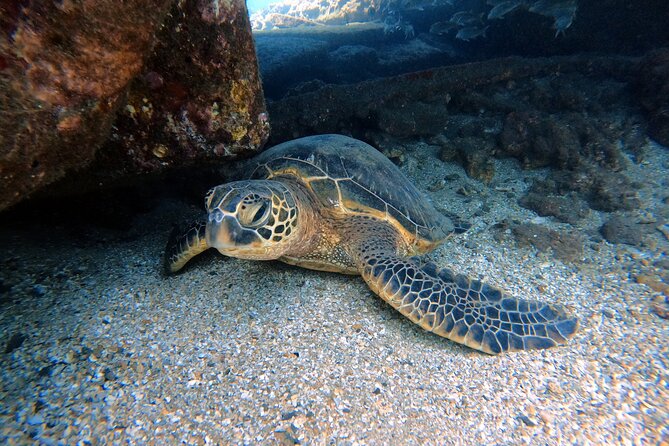
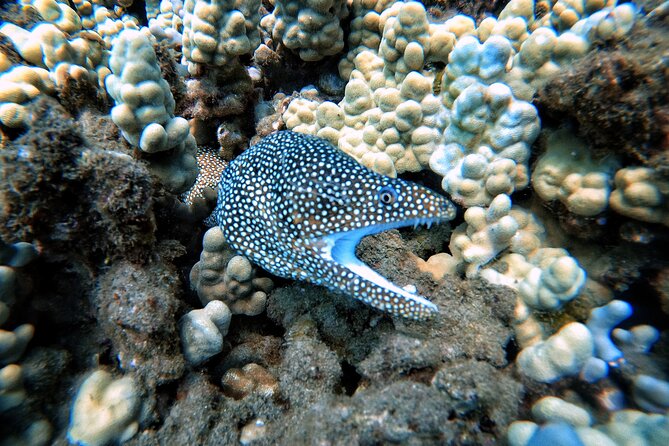
West Maui’s underwater world is the star here. From Kahekili Beach Park, you enter the ocean from shore and explore coral reef habitat where green turtles, spotted eagle rays, octopus, moray eels, white-tip reef sharks, nudibranchs, and small reef fish may appear. Sarah Sisco is one of the guides associated with this experience, and past outings have included sites around Mala Ramp, Mala Pier, Black Rock, and Old Airport.
I like the small maximum group of six, which allows a guide to keep a close eye on the group and point out tiny creatures you could easily miss. I also like the operation’s clear safety briefings and local conservation focus. The catch is simple but important: you must carry at least 40 to 50 pounds of equipment into and out of the water, and the ocean entry may feel demanding if you have not been active recently.
Key points
- Shore entry from Kahekili Beach Park: You carry your equipment into the water rather than boarding a boat.
- Small group size: The outing is limited to six participants.
- Certified participants only: Bring proof of certification, and consider a refresher if you have not been underwater in two years.
- Local guides: Sarah Sisco, Deborah, and Brian are named in connection with instruction and guiding.
- Possible marine life: Look for green turtles, spotted eagle rays, octopus, white-tip reef sharks, moray eels, frogfish, nudibranchs, and reef fish.
- Post-outing altitude rule: Remain below 1,000 feet for 18 hours afterward, which rules out Haleakala, some upcountry trips, helicopter flights, and several high-elevation activities.
What the two-hour West Maui outing is really like
This is a compact ocean session built around a shore entry, not a boat trip to a distant reef. You meet at Kahekili Beach Park, at 65 Kai Ala Drive in Lahaina, and finish back at the same meeting point. The listed duration is about two hours, so expect a focused experience rather than an all-day water excursion.
The exact underwater site can vary. The operation has guided certified participants at places including Mala Ramp, Mala Pier, Black Rock, and Old Airport. That variety matters because West Maui’s conditions can change, and a local guide can choose a suitable area rather than lock you into one fixed offshore location.
Before entering the water, you receive a briefing and equipment. The available reports point to careful explanations of what to expect, solid preparation, and attention to safety. That is especially useful for anyone whose certification is current on paper but whose last ocean session was a long time ago.
Once you are ready, the physical part begins. You carry your scuba equipment to the water and enter from shore. The published requirements vary slightly in wording, but the message is clear: plan on handling at least 40 pounds, with 50 pounds listed as the minimum carrying ability in the main description. You also need to be in good physical health.
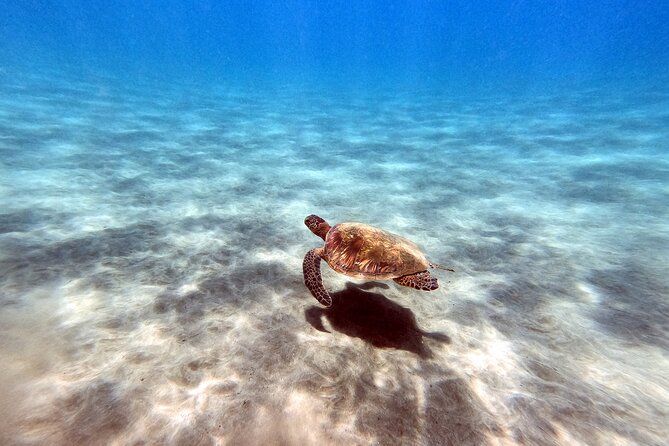
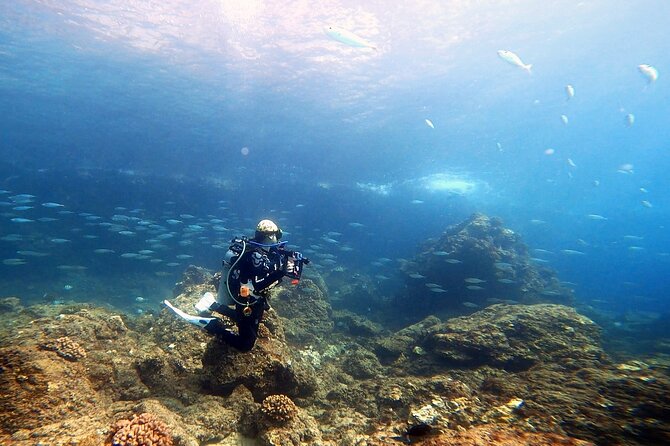
Underwater, the guide leads you across coral reef habitat and points out animals and smaller reef life. You may see a green turtle cruising over the bottom, an octopus tucked into a crevice, or a moray eel peering from shelter. Tiny subjects such as nudibranchs, frogfish, and unusual reef fish reward a slower pace and careful observation.
The session returns to the beach rather than ending at a marina. That keeps the outing short and direct, but it also means the physical work of entering and leaving the sea is part of the experience. If you are accustomed only to boat-based scuba outings, do not treat this as a minor detail.
More Kaanapali Beach tours and cruises:
- Maui: Original Sunset Cruise with Open Bar from Ka’anapali Beach
★ 5.0 · 1,422 reviews - West Maui Half Day Snorkel from Ka’anapali Beach
★ 5.0 · 1,253 reviews - Maui Premium Sunset Dinner Cruise from Ka’anapali Beach
★ 5.0 · 903 reviews
Why the small group matters underwater
A maximum of six participants is one of the strongest features here. A group that size gives Sarah, Deborah, Brian, or another guide a better chance to monitor everyone’s comfort and position. It also makes it easier to pause for a small animal without creating a long line of people waiting behind you.
Small creatures are part of the appeal. Green turtles are the best-known possibility, but the less obvious sightings may be more rewarding for experienced participants. Nudibranchs, frogfish, leaf scorpionfish, and octopus require patience and sharp eyes. One reported outing also included schools of spotted eagle rays, which can turn an ordinary reef visit into a memorable one.
The group limit does not guarantee a private session. Conditions, animal behavior, and the ability of the group all affect the pace. Still, six is a manageable number for a guide-led shore excursion, particularly when the route includes a challenging water entry.
The small format also suits divers who want instruction or a confidence check without booking a full certification course. Sarah’s work with newer participants and junior certification students suggests a calm, encouraging teaching style. At the same time, experienced participants have used the operation for multiple sessions and weeklong arrangements, so this is not aimed only at beginners.
Sarah Sisco and the human side of the outing
Sarah Sisco is the guide name that appears most often in connection with this activity. She has led sessions at Mala Ramp, Old Airport, Black Rock, and Mala Pier, and has worked with both newer participants and highly experienced scuba people.
That range is useful to know. Someone with only a few dozen total sessions, including a long gap of many years, may need a patient guide who does not rush the first return to the ocean. A seasoned participant may instead want a guide who can locate small marine life and allow a relaxed bottom pace. Sarah’s reported work covers both situations.
Deborah is also associated with the operation as an owner or manager who helps arrange sessions and provide support. Brian has led at least one session as well. The broader impression is of a small local team rather than a large resort activity with a rotating crowd of staff.
Communication is in English, and all participants must be fluent enough to understand the dive professionals. That requirement is practical, not decorative. You need to follow safety directions, understand the briefing, and communicate clearly in the water.
The operation works with Avelo, SSI, and PADI instruction, according to the supplied information. This does not turn the two-hour outing into a certification course, but it does show that the business also serves people working on training and skills.
Marine life: what you may actually see
The animal list is broad, but it should be read as a set of possibilities rather than a promise. West Maui reef conditions, visibility, weather, timing, and the animals themselves determine what appears on a given session.
The larger possibilities include:
- Green turtles
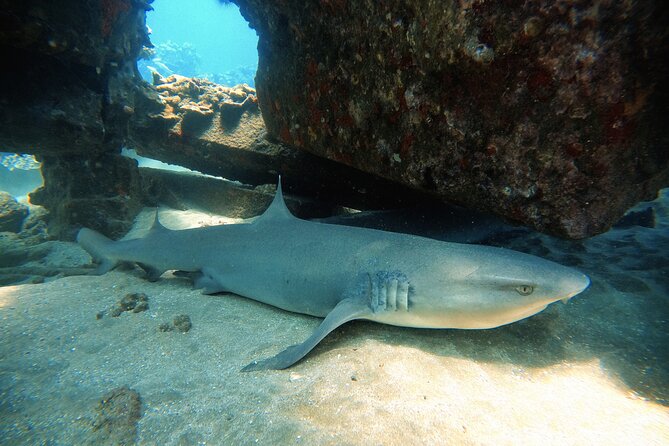
- White-tip reef sharks
- Spotted eagle rays
- Moray eels
- Octopus
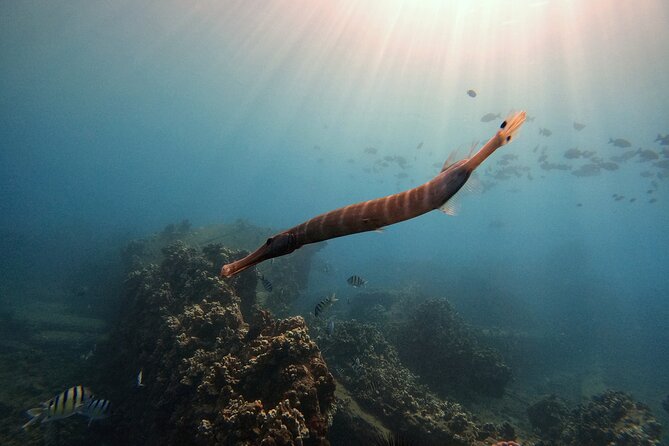
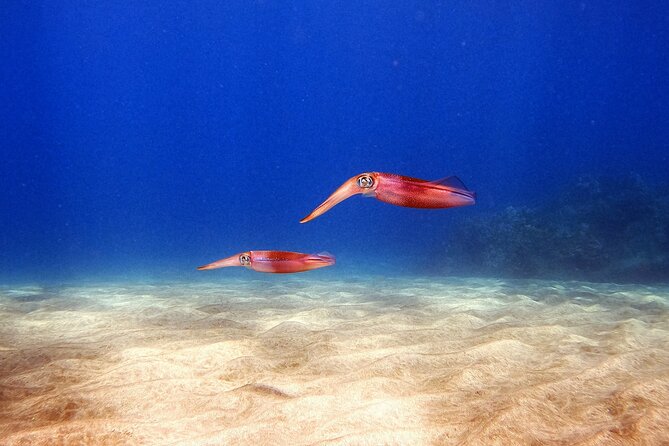
You may also encounter frogfish, nudibranchs, leaf scorpionfish, and many colorful reef fish. The smaller animals are where a guide’s local familiarity can make a real difference. A casual swim past a reef can look quiet, while a trained eye notices a well-camouflaged frogfish or a tiny nudibranch.
Whale song is possible in season. This is an especially appealing detail because sound travels through water in a way that can make a distant whale feel surprisingly present. It is not a guaranteed sighting or sound, but the seasonal possibility adds another layer to a West Maui outing.
Coral reef viewing is central to the experience. The focus is not simply on collecting a list of animals. You are looking at a living habitat, with small fish, invertebrates, turtles, and larger animals sharing the same space. The conservation message is tied to that setting, and the company says part of its work supports local reef conservation and Maui community rebuilding.
Keep your expectations sensible. The white-tip shark, turtle, or eagle ray may not appear. The reef can still be worthwhile when the main reward is a collection of small discoveries rather than one dramatic encounter.
More Maui dive trips:
- 2 Tank Lanai Cathedral Scuba Dive Via Boat for Certified Divers
★ 5.0 · 548 reviews - Intro/Refresher Dive Swim Ability Required
★ 5.0 · 248 reviews - Small-Group Shark and Turtle Dive for Certified Divers
★ 5.0 · 219 reviews - Beginner Scuba Dive in Lahaina: Swimming Required
★ 5.0 · 219 reviews
The shore entry is the main physical test
The biggest practical issue is not the time underwater. It is getting into and out of the sea with your equipment. You must be able to carry a minimum of 40 pounds, while the main description asks participants to be able to carry at least 50 pounds. I would plan around the higher figure.
You also need a moderate level of physical fitness and good overall health. If you have concerns, consult your physician before booking. This is not the right choice for someone who is hoping to avoid lifting, walking with equipment, or managing an ocean entry.
The requirement can be easy to underestimate. A person may feel perfectly comfortable swimming but still find the equipment carry tiring. If your last ocean session was more than two years ago, the operator strongly recommends a refresher. That is good advice, especially for a shore outing where entry, exit, buoyancy, and changing conditions all come into play.
If you become unsafe or uncomfortable and choose not to continue, you may not complete the outing and will not receive a refund. This policy makes it important to be honest about your ability before booking. You should not use a vacation activity as a test of whether you can still manage basic scuba skills.
Equipment, preparation, and what to bring
Scuba equipment and government fees are included. Private transportation is not, so you need to make your own way to Kahekili Beach Park. The meeting point is near public transportation, according to the supplied information, but no private pickup is included.
Bring proof of certification. This is a certified-participant activity, and the staff must be able to confirm that you are qualified to take part. If you have a physical certification card or another accepted record, keep it accessible rather than buried in luggage.
The operator provides equipment, but you should still arrive ready for an active beach session. Wear practical swimwear and bring whatever personal items you need for time at a public beach. The supplied details do not promise storage, towels, snacks, or hotel transfers, so do not assume those are included.
The communication language is English. Make sure you can understand the guide’s instructions without relying on translation from another participant. Safety information is too important to leave unclear.
Price and value at $169
At $169 per person, this is not the cheapest way to spend two hours in Maui’s water. The price includes scuba equipment and government fees, which improves the value for people who do not want to bring a full kit or arrange separate rentals.
You are also paying for a guide-led experience in a small group. That matters more on a shore outing than it might on a simple beach swim. A guide can help with the briefing, keep the group together, identify small reef animals, and adjust the session to local conditions.
The value is strongest for certified participants who want a convenient West Maui session without booking a larger boat operation. It is also appealing if you care about local instruction and reef conservation. The value is weaker if you already own all your gear, want a full day of multiple sites, or prefer a boat to do the hard work of reaching the water.
A two-hour listed duration is short, but it does not mean the entire time is spent underwater. Equipment preparation, the briefing, entry, exit, and returning gear all take part of the session. Book it for a focused local outing, not for an all-day scuba program.
Plan the rest of your Maui day carefully
The altitude rule is easy to miss and important. After the session, you must stay below 1,000 feet for 18 hours. That rules out Mount Haleakala, certain hikes, upcountry towns such as Kula and Makawao, helicopter tours, paragliding, hiking, and ziplining during that period.
This restriction can affect your itinerary more than the two-hour schedule suggests. Do not book a morning ocean session and a high-elevation afternoon excursion. Put this activity on a day when you plan to remain at lower elevations, and check the timing of your next day’s plans as well.
Weather can also cancel the outing. If poor weather causes a cancellation, you can receive a different date or a full refund. The activity also requires a minimum number of participants, and if that minimum is not met, you are offered another option or a full refund.
You can cancel for a full refund up to 24 hours before the local start time. Cancellations or changes inside that window are not refunded or accepted. That gives you some flexibility, but you still need to watch the clock and the local time.
Who should book this West Maui shore session
I would recommend it to a certified participant who:
- Has been underwater recently or is willing to take a refresher
- Can carry at least 40 to 50 pounds of equipment
- Wants a small group rather than a large boat outing
- Enjoys looking for small reef animals
- Is comfortable speaking English
- Can keep the following 18 hours below 1,000 feet
It is particularly suitable for someone staying near West Maui who wants a short, local session. It also fits experienced participants who prefer several guided shore locations, as the operation has worked at more than one site along the Ka’anapali area.
I would think twice if you have not been in the water for years, are uncertain about your physical ability, or dislike entering the ocean from shore. A boat-based option may suit you better if carrying equipment across a beach and into the water is a concern.
Should you book Aloha Maui Diving?
Book this outing if you want a small-group, guide-led reef session and you are genuinely comfortable with a shore entry. The combination of local guides, included equipment, possible turtle and ray sightings, and attention to conservation gives the price a reasonable purpose.
Skip it if you are looking for a full-day program, private transportation, guaranteed large animals, or an easy experience with little physical effort. The most important decision is not the animal list. It is whether you can safely manage the equipment and the ocean entry.
For a current certified participant who wants West Maui marine life without committing an entire day, this is a practical choice. Plan your altitude restrictions, bring proof of certification, and ask yourself honestly if your recent fitness and water experience match the demands.
FAQ
Where does the activity begin?
It begins at Kahekili Beach Park, 65 Kai Ala Drive, Lahaina, Hawaii 96761.
Where does the activity end?
It ends back at the meeting point at Kahekili Beach Park.
How long does the activity last?
The listed duration is approximately two hours.
How much does it cost?
The listed price is $169 per person.
Is scuba equipment included?
Yes. Use of scuba equipment and government fees are included.
Is private transportation included?
No. Private transportation is not included.
How many people can join?
The activity has a maximum of six participants.
Do I need to show proof of certification?
Yes. Participants must bring proof of certification.
What if I have not been underwater in two years?
A refresher is strongly recommended if you have not been underwater in the last two years.
How high can I go after the activity?
You must remain below 1,000 feet for 18 hours after the session. This affects places and activities such as Haleakala, some hikes, upcountry towns, helicopter tours, paragliding, and ziplining.
Just added around Maui
- Whale Watch Sail Ma’alaea★ 4.9 · 27 reviews
- Wailea-Makina: Sea Caves, Molokini Snorkel & Turtle Town★ 4.9 · 37 reviews
- West Maui and Molokai Special 45-Minute Helicopter Tour★ 5.0 · 9 reviews
- 2.5 Hour Whale Escape Tour★ 5.0 · 44 reviews
- Turtle Town Clear Kayak & Snorkel Tour (8am-11am)★ 5.0 · 6 reviews
- Maui: Private All-Inclusive Road to Hana Tour with Pickup★ 5.0 · 28 reviews
- Whalewatch Deluxe Tour from Ma’alaea Harbor★ 4.5 · 37 reviews
- Zumba Classes in Kihei Maui – Private or Group (This class is high impact )★ 4.5 · 6 reviews
Maui Scuba Diving Tours, compared.
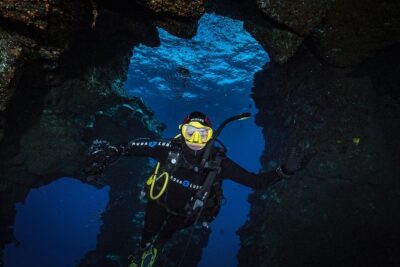
2 Tank Lanai Cathedral Scuba Dive Via Boat for Certified Divers
Read our review →
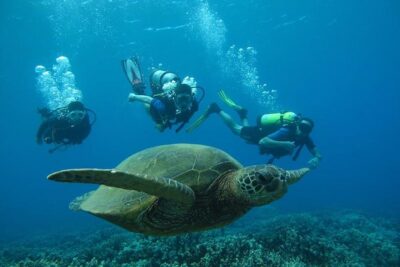
Beginner Scuba Dive in Lahaina: Swimming Required
Read our review →
Small-Group Shark and Turtle Dive for Certified Divers
Read our review →
Maui Scuba Diving Introductory Lesson from Lahaina
Read our review →
VIP Aloha Nui Snorkel Adventure w/ optional SCUBA from Lahaina
Read our review →Browse the lists this tour appears in